Demand Management: Know Before the Contracted Capacity Is Exceeded
Argus EMS tracks transformer and main-meter demand as 15-minute averages, compares the in-month peak with the contracted capacity and alerts the site team when an overrun becomes likely, before the invoice is issued.
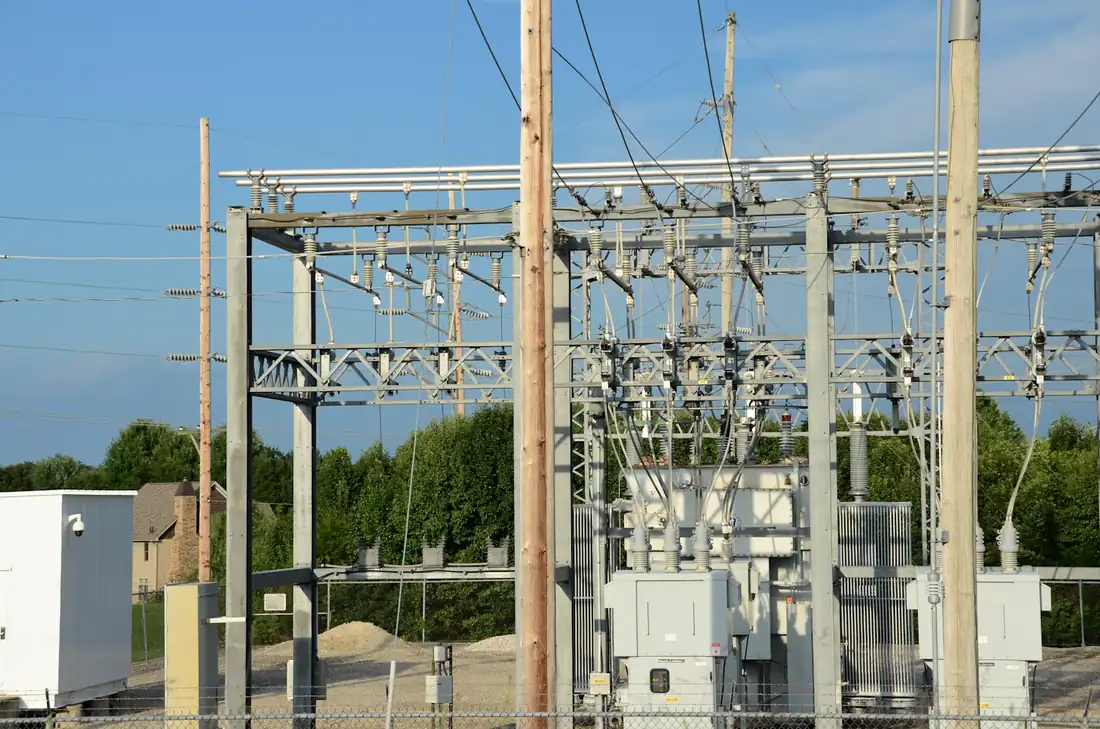
Why Is the Capacity Overrun Charge Noticed So Late?
For facilities supplied at medium voltage, the invoice is not made up of consumed kWh alone. The distribution company charges a capacity fee on the contracted capacity, and when the month's highest 15-minute average demand exceeds it, a capacity overrun charge is added for the excess. A single 15-minute interval decides this line: a facility that runs smoothly all month can set that month's overrun with a few large loads starting at the same time.
The problem is that this is usually learned when the invoice arrives. By then the month has closed and the overrun cannot be undone. Overruns repeated in consecutive months show that the contracted capacity does not match the facility's real load; either load must be shifted or the contract reviewed.
The opposite is costly too: a contracted capacity far above the real peak means paying a capacity fee every month for capacity that is never used. A sound decision needs the monthly peaks on the same screen. We cover the ways to reduce the capacity fee in detail in the reducing the capacity charge article.
How It Works
- 15-minute average demand for transformers and main meters (kVA and kW)
- Status band relative to contracted capacity: oversized, healthy, approaching, at limit, exceeded
- In-month peak forecast: month-end projection from the month's peak and recent trend
- Warning when the forecast reaches 90% of contracted capacity, critical alarm on overrun
- Several transformers are summed simultaneously in the same 15-minute interval — one supply point, one contract
- Monthly peak demand history and a two-consecutive-month overrun flag
- Alerts arrive by email; alarm history is kept for audit
What Share of the Contracted Capacity Is the Peak Using?
Argus EMS divides the 15-minute demand by the contracted capacity and places the result in one of five bands. The band shows both overrun risk and an oversized contract on the same scale.
| Ratio | Status | What to Do |
|---|---|---|
| Below 70% | Contract oversized | Reducing the contracted capacity can be considered |
| 70% – 85% | Healthy | Keep monitoring |
| 85% – 95% | Approaching | Load-shifting options are investigated |
| 95% – 100% | At limit | The start-up order of large loads is planned |
| Above 100% | Exceeded | Overrun charge risk; the source of the peak is found to prevent a repeat |
Lowering Peak Demand and Demand Response
The way to prevent an overrun is usually not to consume less but to spread consumption over time. Sequencing chiller groups, compressors, furnaces or charging stations so they do not coincide in the same 15 minutes lowers peak demand while total kWh stays the same. Because Argus EMS tracks each device's power separately, you can see how much each load contributes to the peak, and the shifting decision is made with that data.
Demand response programmes ask the same question: how much load can the facility release on request, and for how long? The answer lies in the historical 15-minute profile. For the cost effect during peak hours, see the shifting load out of peak hours article.
What Is Demand Management?
Demand management is the work of monitoring peak loads and spreading them over time to keep a facility's 15-minute average power demand below its contracted capacity. Argus EMS measures demand per transformer, forecasts the in-month peak and warns before the invoice when an overrun is likely.
Who Is It For?
- Factories and industrial-zone sites supplied at medium voltage, with a capacity charge on the invoice
- Hospitals, shopping centres and campuses whose transformers share one contract
- Facilities where large loads such as chillers, compressors or furnaces start together
- Energy managers considering reducing or increasing their contracted capacity
Technical Specifications
| Feature | Value |
|---|---|
| Demand interval | 15-minute average |
| Measurement source | Transformer / main panel energy analyser (Modbus) |
| Comparison | Contracted capacity (kVA) — project total or per transformer |
| Warning | When the month-end forecast reaches 90% of contracted capacity |
| Critical alarm | When the month's peak or the forecast reaches contracted capacity |
| History | Monthly peak demand, consecutive overrun flag |
Go Deeper
Demand data comes from the transformer; for load ratio and temperature see transformer monitoring, and for kWh and tariffs see electricity consumption monitoring. How alerts are produced is explained on the alarm engine page, and the effect of the capacity charge on the monthly budget on the budget projection page. For industrial sites, factory energy management is the starting point.
Demand Management — Frequently Asked Questions
See Your Facility's Peak Demand
A free demo with your existing transformer and main panel analysers.